


How to Organize Practical Meals Away from Home Without Disposable Cutlery?
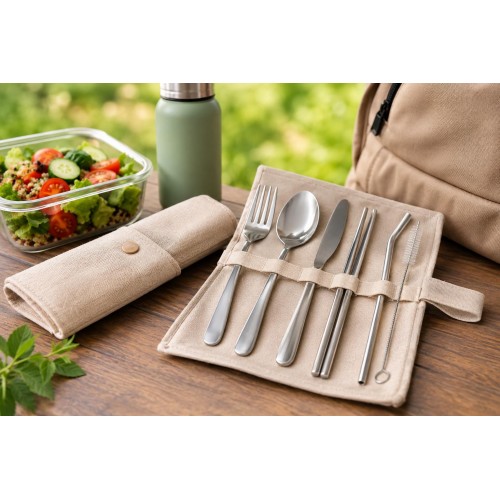
Eating away from home is part of everyday life for many people. Sometimes we have lunch at work, other times we grab food on the go, enjoy a weekend picnic or travel. In these situations, disposable cutlery often seems like the easiest solution. It is readily available and convenient, but after a short period of use, it becomes waste.
However, we can enjoy the convenience of eating out without constantly relying on disposable plastic forks, spoons, knives and straws. All we need is a small set of reusable essentials, chosen according to the food we usually eat and our daily habits.
This does not require a major lifestyle change. With a few carefully selected accessories, we can be prepared for different situations – from an ordinary lunch at the office to a trip or an outdoor meal.
Why Is It Worth Using Reusable Cutlery?
When we regularly buy takeaway food or eat away from home, we often use cutlery that is thrown away immediately afterwards. Although each individual item may seem insignificant, frequent use contributes to the growing amount of waste.
Using our own cutlery is an easy way to reduce this habit. Instead of taking a new plastic fork or spoon every time, we can reuse the same set again and again.
Apart from the environmental benefits, there is also a practical reason to make this change: we always have the utensils we need, whether we bring homemade food, order lunch or eat while travelling. We can choose exactly what to include in our set and avoid depending on the availability of disposable cutlery.
What Should We Include in Our Meal Kit for Eating Away from Home?
We do not all need to carry the same items. The most suitable set depends on the food we prefer and the situations in which we most often eat away from home.
1. Reusable Cutlery
A fork, spoon and knife are the basics of a practical set. They are suitable for salads, pasta, rice, fruit, desserts and various ready-made meals.
When choosing cutlery, it is worth considering the material, weight and ease of use. Stainless steel cutlery is a durable option, while bamboo models are lightweight and convenient to carry. Each material has its own characteristics, so it is important to consider its care requirements as well.
It is a good idea to choose a set that comes with a pouch or case to keep the utensils together. This makes them easier to carry and helps keep them separate from other belongings.
2. Reusable Chopsticks
If we often eat sushi, noodles or other Asian dishes, carrying our own chopsticks can be a useful addition.
Many models are compact and come with a dedicated case. When choosing a pair, consider the length, shape and material that best suit your preferences. It is also important that the chopsticks are easy to clean and can be stored hygienically after use.
3. Reusable Straws
For those who enjoy drinking through a straw, a reusable option is a practical alternative to disposable ones. It is suitable for water, juice, smoothies and other beverages.
Reusable straws are available in different sizes and materials. When choosing one, think about the drinks you consume most often. For thicker beverages, for example, you may need a model with a wider diameter.
Straws that come with a dedicated cleaning brush are particularly useful. It helps remove drink residue from the inside of the straw.
4. A Storage Case or Box
Having a suitable place to store your utensils makes the set more convenient for everyday use. A pouch or box helps keep everything organised and prevents the utensils from coming into contact with other belongings in your bag.
It is also useful to have a separate bag for used cutlery. If we cannot wash the utensils immediately after eating, we can temporarily store them there until we have access to proper cleaning facilities.
How to Prepare Your Set for Different Situations
There is no need to carry every item everywhere. We can adjust the contents of our set according to our plans and the food we have chosen.
For lunch at the office
If we bring homemade food, a fork, spoon and knife are usually enough. We can keep an extra set at work so that we do not have to remember to take it with us every day.
For takeaway food
When buying food to eat on the go, it is worth considering exactly what we will need. A sandwich, piece of fruit or pastry may not require any cutlery, while a fork can be useful for a salad or a ready-made meal in a container.
For picnics and outdoor activities
When eating outdoors with friends or family, we can prepare a separate set for each person. This way, we will not need to rely on disposable plastic cutlery.
For travelling
A travel set should be adapted to the length of the journey and the way we plan to eat. When travelling by plane, it is important to check the rules for carrying items in hand luggage in advance, especially if we have a pointed utensil or a knife.
How to Keep Your Utensils Clean
Hygiene is an essential part of using reusable cutlery. Since we carry these items with us and use them in different places, we need to pay attention to both cleaning and storage.
It is best to wash the utensils as soon as possible after eating. If we do not have access to a sink, we can remove visible food residue with a napkin and temporarily store them in a separate pouch or container. This is only a temporary solution – we should wash them thoroughly with water and dishwashing liquid as soon as possible.
With reusable straws, it is important to clean the inside as well, using a suitable brush if necessary. This helps remove drink residue that cannot be seen from the outside.
Before putting the utensils back into their case, we should make sure they are completely dry. We should not forget about the storage case itself – the pouch or box also needs to be cleaned regularly.
It is always a good idea to follow the manufacturer's instructions, as different materials may have specific care requirements.
How to Make Carrying Your Own Cutlery a Habit
Choosing the right set is only the first step. To use it regularly, we need to find a convenient place for it in our daily routine.
A few simple solutions can help:
-
Choose only what you need. Start with a fork, spoon or another utensil you use most often. There is no need to carry items you are unlikely to use.
-
Keep your set somewhere accessible. You can leave it in your everyday bag, backpack or at your workplace.
-
Put it back after cleaning. Once the utensils have been washed and are completely dry, prepare them for their next use.
When the set matches our habits, using it gradually becomes a natural part of everyday life.
Frequently Asked Questions
Are reusable cutlery sets heavy?
Not necessarily. Many sets are specifically designed for carrying around and are compact and lightweight. Their weight depends on the material and the number of items included.
Can we carry cutlery in our bag every day?
Yes. When placed in a suitable pouch or case, it can easily be stored alongside our other personal belongings. After use, the utensils should be kept separate from clean items until they are washed.
How should we clean a reusable straw?
Wash it with water and dishwashing liquid, making sure to clean the inside thoroughly. Some models require a special cleaning brush. After washing, leave the straw to dry completely.
Do we need to carry a complete cutlery set?
No. We can choose only the items we use most often. For some people, a single fork or spoon is enough, while others prefer a complete set with additional accessories.
Is reusable cutlery suitable for travelling?
Yes. Compact sets are convenient for trips and outdoor activities. However, when travelling by plane, we need to follow hand luggage regulations, especially if the set includes a knife.
Practical Meals Away from Home with Less Disposable Waste
Eating away from home does not necessarily mean using disposable cutlery every time. With a few suitable essentials, we can be prepared for lunch at the office, takeaway food, a picnic or a trip.
Our set does not need to be large or complicated. What matters is that it includes the items we actually use and is easy to maintain. This way, we can gradually reduce our use of disposable accessories without giving up the convenience of eating away from home.
Sometimes, the smallest changes in our daily routine are the easiest to maintain as long-term habits.
Write a comment