


How to Clean a Water Bottle Properly and How Often Should You Do It
A reusable water bottle is no longer just an accessory; it has become part of our everyday lives. We take it to the office, to the gym, on walks and when travelling. It helps us drink water regularly and reduces the need for single-use plastic bottles.
However, to keep it in good condition and preserve the fresh taste of our water, it is important to look after it properly. Even when we use a bottle exclusively for water, dirt and moisture can accumulate on the inner walls, cap, straw and silicone seals. If the bottle is not cleaned thoroughly, this can lead to unpleasant odours and visible residue.
In this guide, we will explore how often you should wash your water bottle, how to clean different materials and how to avoid the most common maintenance mistakes.
1. Why Is Regular Bottle Cleaning Important?
Every time we drink directly from a bottle, microorganisms from our mouths can come into contact with the opening or straw. Moisture and small amounts of residue can also remain on the cap and seals.
If moisture remains for a prolonged period and the bottle is not cleaned properly, a biofilm may develop on some surfaces. This is a layer of microorganisms and substances that can trap additional dirt.
The problem can be more noticeable when bottles are used to store juice, sweetened drinks, tea with honey or protein shakes. These beverages can leave residues that become more difficult to remove if they are left inside for too long.
Regular washing helps remove dirt and residue and keeps your bottle clean and pleasant to use.
2. How Often Should You Wash Your Water Bottle?
A good practice is to empty and wash your bottle at the end of each day when you use it regularly. Simply rinsing it with water is not always enough to remove residue that has stuck to the surfaces.
The recommended frequency also depends on the type of drink:
-
Water only: wash the bottle regularly, preferably at the end of each day of use.
-
Water with lemon or fruit: clean it after use to remove any remaining fruit or juice.
-
Coffee, tea, juice and sports drinks: wash the bottle as soon as possible.
-
Milk-based drinks and protein shakes: do not leave the residue for later; clean the bottle thoroughly after use.
If the bottle has been left closed for several days or you notice an unusual smell, wash it before using it again.
3. How to Clean a Water Bottle Properly
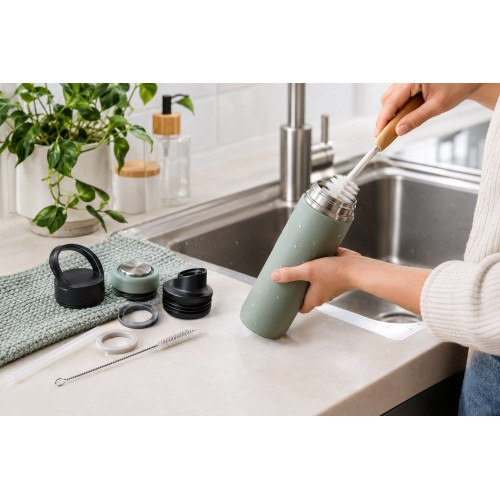
For everyday maintenance, warm water, mild dish soap and a suitable cleaning brush are usually sufficient.
Follow these steps:
-
Empty the bottle. Remove any remaining water or drink, along with visible residue.
-
Disassemble removable parts. Remove the cap, straw and seals if the design allows it.
-
Clean the inside. Use warm water, a small amount of dish soap and a brush that reaches the bottom and inner walls.
-
Clean the cap. Pay attention to the threads, drinking spout and narrow spaces.
-
Rinse thoroughly. Make sure no traces of detergent remain.
-
Allow all parts to dry. Place the bottle and cap separately in a clean, well-ventilated area.
A bottle brush is particularly useful for models with narrow openings. Choose a soft brush that will not scratch the surface or damage the inner coating.
4. Why Should You Never Skip the Cap and Seals?
Sometimes the bottle looks clean, but an unpleasant smell keeps returning. The cause may be the cap, straw or silicone seal.
These parts contain small spaces where moisture and residue can accumulate. That is why they should be cleaned separately.
If the seal is designed to be removable, take it out carefully according to the manufacturer's instructions. Clean both the seal and the area where it sits. For straws, use a specialised narrow brush that can reach the inside.
Do not use sharp objects or force removable parts, as this may damage them. If a seal is cracked or deformed, check whether it can be replaced.
5. How to Remove Unpleasant Odours
Unpleasant odours can develop when a bottle is closed while still damp or when drinks and residue are left inside.
Start by washing the bottle with warm water and mild dish soap. Then clean the cap, straw and seals, if present. Rinse all parts and allow them to dry completely.
If the smell persists, check the manufacturer's instructions for an appropriate deep-cleaning method.
Baking soda may help reduce certain unpleasant odours, provided it is compatible with the bottle's material. White vinegar can be used to address certain mineral deposits, such as limescale, but it is not a universal disinfectant.
Do not use bleach, harsh chemicals or abrasive cleaners indiscriminately. Never mix vinegar with bleach or other cleaning products. If there is visible mould that cannot be removed safely, or the smell returns despite thorough cleaning, consider replacing the affected parts or the entire bottle.
6. How to Clean Bottles Made from Different Materials
Different materials have specific care requirements, so always check the manufacturer's recommendations.
Stainless steel bottles and thermoses
Use warm water, mild dish soap and a suitable brush. Avoid steel wool, abrasive powders and chlorine-based cleaners that may damage certain surfaces. Do not put a thermos in the freezer, and check whether your model is dishwasher-safe.
Glass is generally easy to clean and tends to retain fewer odours. Use mild dish soap and avoid sudden temperature changes and physical impacts. If the bottle has a silicone sleeve, check whether it can be removed so you can clean and dry the area underneath.
Plastic bottles
Clean plastic bottles with mild dish soap and a non-abrasive brush. Do not use boiling water unless the manufacturer specifically permits it. For Tritan and other specialised plastics, check the recommended temperature limits and dishwasher instructions.
Bottles with bamboo caps
Bamboo components require extra care to prevent prolonged exposure to moisture. If the manufacturer recommends handwashing, avoid soaking the cap for extended periods and dry it thoroughly after cleaning.
7. What Should You Know About Bottles with Filters?
Bottles with filters require additional care. It is important to distinguish between cleaning the bottle itself and maintaining the filter element.
Before washing, check whether the filter needs to be removed. Do not scrub it with detergent or expose it to high temperatures unless the manufacturer explicitly allows this.
Clean the bottle and cap regularly, and replace the filter according to the recommended replacement schedule. Different filters serve different purposes and do not necessarily remove every type of contaminant from water.
You can learn more in our article about how an activated carbon water filter works and when it makes sense to use one.
8. Can You Wash a Bottle in the Dishwasher?
This depends on the specific model. Some bottles and caps are dishwasher-safe, while others must be cleaned by hand.
Before using a dishwasher, check the manufacturer's instructions, temperature limits and requirements for removable parts. For bottles with filters, check whether the filter needs to be removed first.
Even when the bottle itself is dishwasher-safe, the cap and narrow spaces may still require additional cleaning.
Cleaning your water bottle properly is a simple habit that helps keep it in good condition and preserve the pleasant taste of your drinks.
Wash it regularly, clean the cap and seals, rinse thoroughly and allow all parts to dry completely. Choose a cleaning method that suits the material and follow the manufacturer's instructions, especially for thermoses, bamboo components and bottles with built-in filters.
When choosing a reusable water bottle, consider not only its design and capacity but also how easy it is to clean. Explore the products available at Bottleco and choose a bottle that suits your needs and fits naturally into your everyday routine.
Write a comment